Beauty Through Art
Art historian Katy Hessel traces how art has shaped, and been shaped by, our ideas of beauty across time.


In the 19th century, a new style of art burst onto the scene. It was led by artists known as the ‘Pre-Raphaelites’, who sought inspiration from medieval art (‘pre-Raphael’) and the Romantic poets. Rebelling against conservative Victorian values and conventional ideas of female beauty, they favoured ethereal-looking women with striking features and long, willowy hair. (Before this, beauty ideals were more rosy cheeks and plump faces.)
Popular models included Fanny Eaton, with her high cheekbones, composed expression and natural beauty, who was depicted by the painter Joanna Boyce Wells wearing a translucent Grecian-style gown, pearl earrings and a loose, glittering turquoise headband.
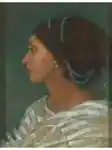
Joanna Mary Wells (née Boyce), Fanny Eaton (née Antwistle or Entwistle) (1861), Yale Center for British Art, Paul Mellon Fund.
In the 19th century, a new style of art burst onto the scene. It was led by artists known as the ‘Pre-Raphaelites’, who sought inspiration from medieval art (‘pre-Raphael’) and the Romantic poets. Rebelling against conservative Victorian values and conventional ideas of female beauty, they favoured ethereal-looking women with striking features and long, willowy hair. (Before this, beauty ideals were more rosy cheeks and plump faces.)
Popular models included Fanny Eaton, with her high cheekbones, composed expression and natural beauty, who was depicted by the painter Joanna Boyce Wells wearing a translucent Grecian-style gown, pearl earrings and a loose, glittering turquoise headband.
Joanna Mary Wells (née Boyce), Fanny Eaton (née Antwistle or Entwistle) (1861), Yale Center for British Art, Paul Mellon Fund.
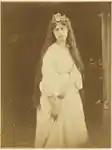
Julia Margaret Cameron, Marie Spartali (1868), Albumen print, Art Institute of Chicago, The Mary and Leigh Block Endowment Fund.
In the late 1800s, photography was becoming popular among artists. Chiming with the style of the Pre-Raphaelite painters, the Indian-born British artist Julia Margaret Cameron photographed her subjects appearing bohemian and angelic, in a soft-focused lens.
One of her favourite models was Marie Spartali Stillman, also an artist, whom she dressed as a mythological character, with a floral headdress atop her long-flowing hair (left).
Julia Margaret Cameron, Marie Spartali (1868), Albumen print, Art Institute of Chicago, The Mary and Leigh Block Endowment Fund.
In the late 1800s, photography was becoming popular among artists. Chiming with the style of the Pre-Raphaelite painters, the Indian-born British artist Julia Margaret Cameron photographed her subjects appearing bohemian and angelic, in a soft-focused lens.
One of her favourite models was Marie Spartali Stillman, also an artist, whom she dressed as a mythological character, with a floral headdress atop her long-flowing hair (left).
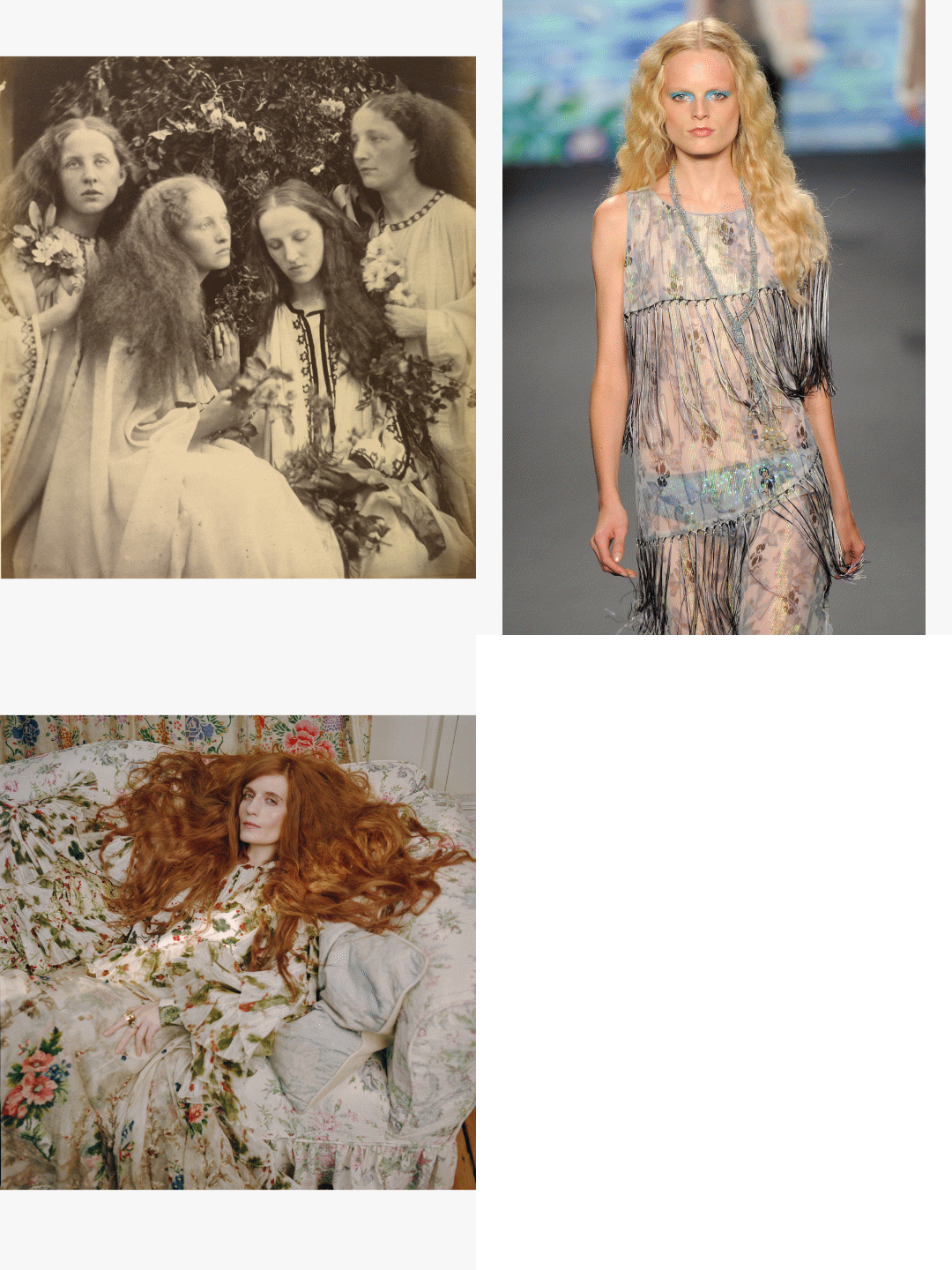
1: Julia Margaret Cameron, The Rosebud Garden of Girls (1868), Albumen silver print, The J. Paul Getty Museum, Los Angeles. 2: Anna Sui SS14. Image credit: Chris Moore via Catwalking/Getty Images. 3: Florence Welch for British Vogue, March 2022. Photography by Autumn de Wilde. Agency: Bureau of Artist Management LLC.
1: Julia Margaret Cameron, The Rosebud Garden of Girls (1868), Albumen silver print, The J. Paul Getty Museum, Los Angeles. 2: Anna Sui SS14. Image credit: Chris Moore via Catwalking/Getty Images. 3: Florence Welch for British Vogue, March 2022. Photography by Autumn de Wilde. Agency: Bureau of Artist Management LLC.