Beauty Through Art
Art historian Katy Hessel traces how art has shaped, and been shaped by, our ideas of beauty across time.


In the 1960s and ’70s, at the onset of the Feminist movement – when women came together to enact progress and more rights – images of the female body began to change. Artists focused on the internal sensation and the magnificent beauty of a woman’s transformative figure, such as Senga Nengudi and Niki de Saint Phalle, who used the language of sculpture to talk about the female body.
In Nengudi’s RSVP series, inspired by her pregnant body, she filled store-bought nylon stockings with sand. Taking a garment usually used to ‘hold women in’, she instead showed us how elastic and versatile the body can be.
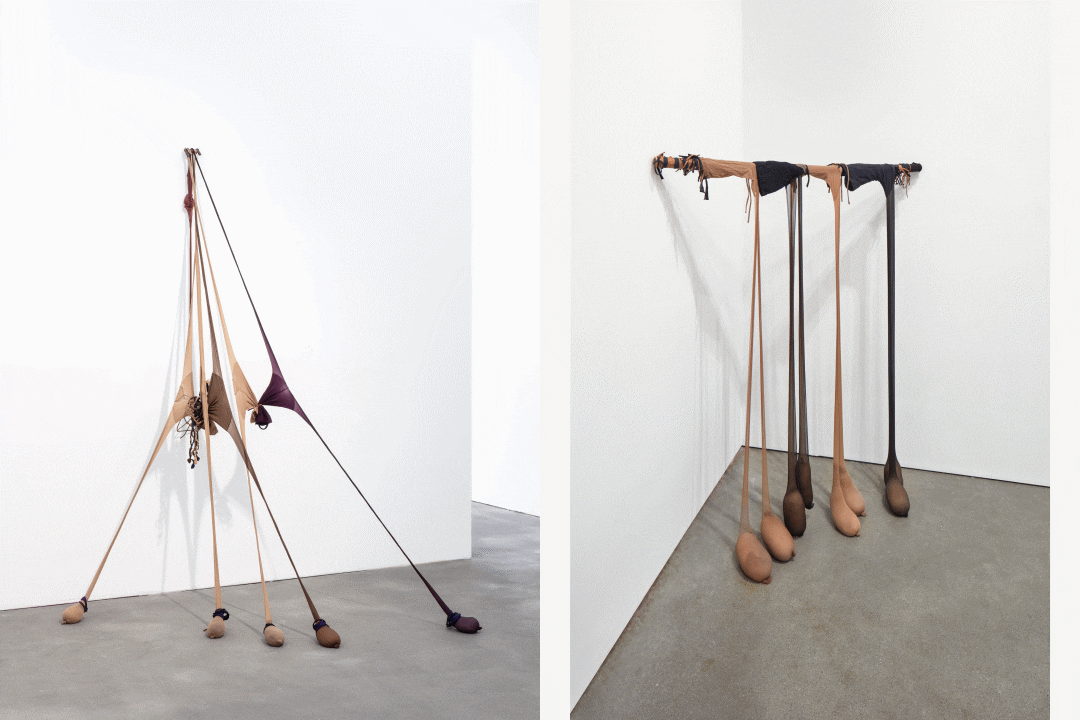
1: Senga Nengudi, R.S.V.P. Reverie "Scribe" (2014) © Senga Nengudi, 2026. Courtesy Sprüth Magers and Thomas Erben Gallery. Photo: Timo Ohler. 2: Senga Nengudi, R.S.V.P. Reverie - “B” Suite (1977/2011), Jeanne L. Wasserman Fund and General Acquisition Fund. Courtesy Lévy Gorvy, New York and London; and Thomas Erben Gallery, New York. © Senga Nengudi
In the 1960s and ’70s, at the onset of the Feminist movement – when women came together to enact progress and more rights – images of the female body began to change. Artists focused on the internal sensation and the magnificent beauty of a woman’s transformative figure, such as Senga Nengudi and Niki de Saint Phalle, who used the language of sculpture to talk about the female body.
In Nengudi’s RSVP series, inspired by her pregnant body, she filled store-bought nylon stockings with sand. Taking a garment usually used to ‘hold women in’, she instead showed us how elastic and versatile the body can be.
1: Senga Nengudi, R.S.V.P. Reverie "Scribe" (2014) © Senga Nengudi, 2026. Courtesy Sprüth Magers and Thomas Erben Gallery. Photo: Timo Ohler. 2: Senga Nengudi, R.S.V.P. Reverie - “B” Suite (1977/2011), Jeanne L. Wasserman Fund and General Acquisition Fund. Courtesy Lévy Gorvy, New York and London; and Thomas Erben Gallery, New York. © Senga Nengudi
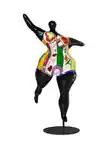
Niki de Saint Phalle, Nana Danseuse (1968). © 2026 Niki Charitable Art Foundation, all rights reserved. Photo credit: Katrin Baumann
Niki de Saint Phalle, Nana Danseuse (1968). © 2026 Niki Charitable Art Foundation, all rights reserved. Photo credit: Katrin Baumann