Beauty Through Art
Art historian Katy Hessel traces how art has shaped, and been shaped by, our ideas of beauty across time.


In the early decades of the 20th century, ideas around gender became the subject of much fascination. Representations of queerness and same-sex desire flourished, with artists using their own image to present identities that didn’t comply with society’s rigid gender categories. Self-fashioning was especially integral to queer artist’s identities, who often showed themselves sporting cropped hair ’dos, and wearing slick, sharp suits.
One example of this is the artist Gluck, who commissioned photographers to take images of them dressed in a sharp tailored suit. We also see this in a portrait of Gluck painted by their friend, Romaine Brooks, titled Peter (A Young English Girl).
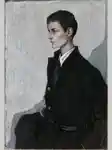
Image credit: Romaine Brooks, Peter (A Young English Girl) (1923-1924), Smithsonian American Art Museum, Gift of the artist, 1970.
In the early decades of the 20th century, ideas around gender became the subject of much fascination. Representations of queerness and same-sex desire flourished, with artists using their own image to present identities that didn’t comply with society’s rigid gender categories. Self-fashioning was especially integral to queer artist’s identities, who often showed themselves sporting cropped hair ’dos, and wearing slick, sharp suits.
One example of this is the artist Gluck, who commissioned photographers to take images of them dressed in a sharp tailored suit. We also see this in a portrait of Gluck painted by their friend, Romaine Brooks, titled Peter (A Young English Girl).
Image credit: Romaine Brooks, Peter (A Young English Girl) (1923-1924), Smithsonian American Art Museum, Gift of the artist, 1970.
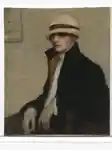
Image credit: Agnes Goodsir, The Parisienne (1924), National Gallery of Australia, Canberra.
Image credit: Agnes Goodsir, The Parisienne (1924), National Gallery of Australia, Canberra.
While clothes were an important way of drawing attention to one’s sexual identity, this particular style was soon adopted as the high fashion of the day, such as with the trend of trousers among women.
In 2024, Scottish designer S.S.DALEY’s debut womenswear collection was a tribute to Gluck, as seen in the sharp suits and elegant, masculine, dark but slightly feathery hair, and minimal makeup that accentuated the models’ cheekbones.
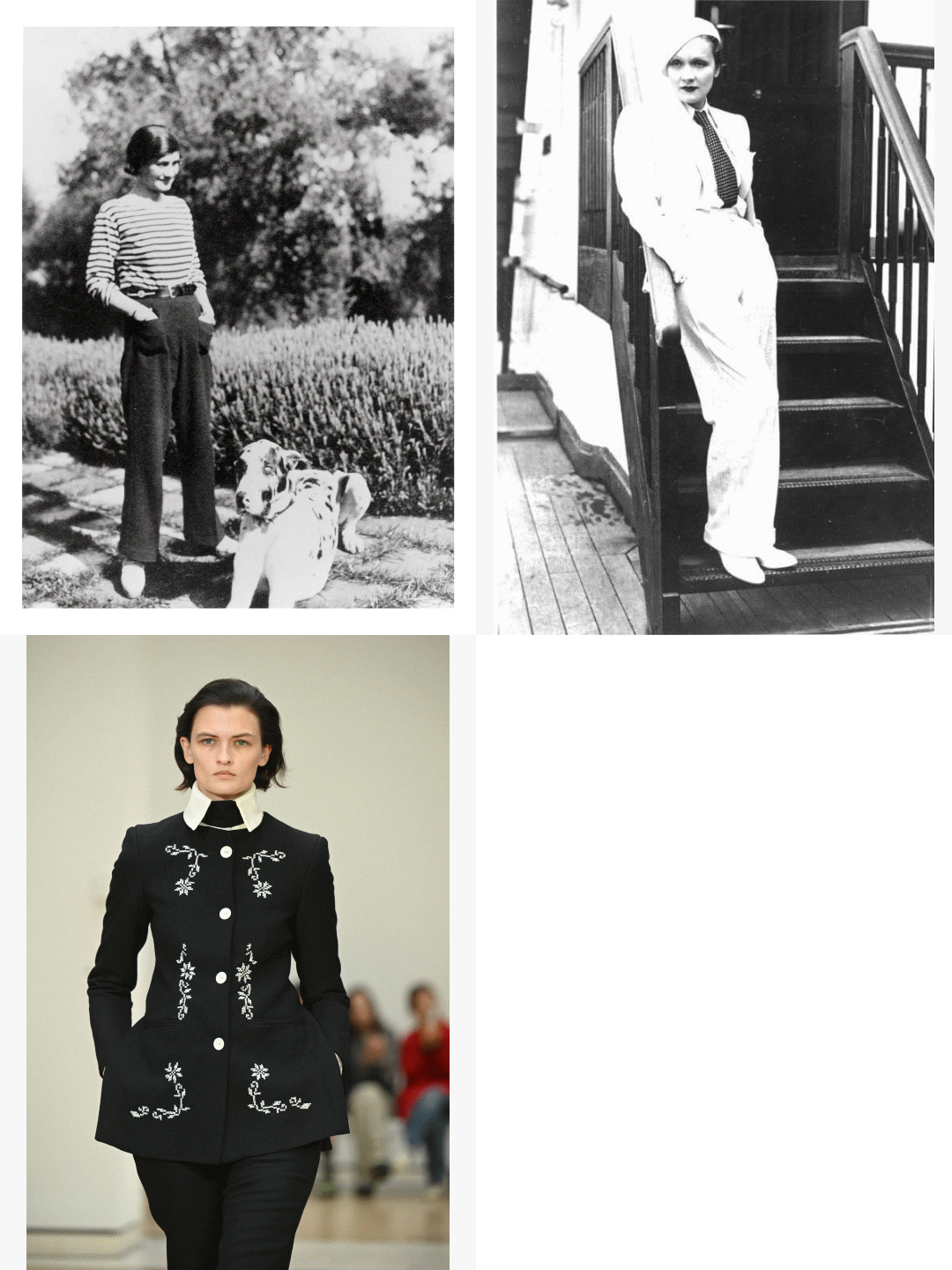
1: Gabrielle Chanel with her dog Gigot at La Pausa (1930). © Private Archives/All rights reserved. Courtesy of CHANEL. 2: Marlene Dietrich (1933) Image credit: Bundesarchiv, via Wikimedia Commons. 3: SS Daley SS25. Image credit: Stuart C. Wilson/Getty Images.
While clothes were an important way of drawing attention to one’s sexual identity, this particular style was soon adopted as the high fashion of the day, such as with the trend of trousers among women.
In 2024, Scottish designer S.S.DALEY’s debut womenswear collection was a tribute to Gluck, as seen in the sharp suits and elegant, masculine, dark but slightly feathery hair, and minimal makeup that accentuated the models’ cheekbones.
1: Gabrielle Chanel with her dog Gigot at La Pausa (1930). © Private Archives/All rights reserved. Courtesy of CHANEL. 2: Marlene Dietrich (1933) Image credit: Bundesarchiv, via Wikimedia Commons. 3: SS Daley SS25. Image credit: Stuart C. Wilson/Getty Images.
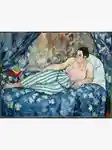
Image credit: Suzanne Valadon, La Chambre bleue (1923), Gift by Joseph Duveen, 1926. Paris, Centre Pompidou, Musée national d’art moderne
The 20th century was a haven of opportunities for women artists – in education, economy and travel. Not only were those working in Europe exposed to a plethora of non-Western art influences, but –especially with men away at battle during the First World War – women had to take on new roles, and gained more independence than ever before. By 1920, many countries in Europe had given women the vote.
We see this independence play out in art history.
For example, The Blue Room (1923), is a self-portrait of the French-born former model, Suzanne Valadon. In a Parisian attic-style room that she has bought for herself, Valadon lies in casual clothes (trousers, popularised by the androgynous trends of the early 20th century), with a cigarette hanging out of her mouth and books pushed to the back of the bed.
Image credit: Suzanne Valadon, La Chambre bleue (1923), Gift by Joseph Duveen, 1926. Paris, Centre Pompidou, Musée national d’art moderne
The 20th century was a haven of opportunities for women artists – in education, economy and travel. Not only were those working in Europe exposed to a plethora of non-Western art influences, but –especially with men away at battle during the First World War – women had to take on new roles, and gained more independence than ever before. By 1920, many countries in Europe had given women the vote.
We see this independence play out in art history.
For example, The Blue Room (1923), is a self-portrait of the French-born former model, Suzanne Valadon. In a Parisian attic-style room that she has bought for herself, Valadon lies in casual clothes (trousers, popularised by the androgynous trends of the early 20th century), with a cigarette hanging out of her mouth and books pushed to the back of the bed.
It speaks to Virginia Woolf’s 1929 essay, A Room of One’s Own – but it also challenges hundreds of years’ worth of beauty ideals in art history.
Notice how the pose mirrors the male Old Masters’ seductive reclining Venus – the Greek (where she was known as Aphrodite) and Roman goddess of love and beauty (right). Rather than gazing at the viewer, luring the (assumed/presumed male) spectator in, or draping her idealised nude figure over sensually scrunched-up sheets, the female subject is in command of her scene – doing whatever she wants, whenever she wishes.
How can we think about beauty taking a turn to the independent woman? Is this the moment when the woman becomes both artist and model?

Image credit: Titian, detail of Venus of Urbino (1538), Galleria degli Uffizi, Florence; photo: Steven Zucker.
It speaks to Virginia Woolf’s 1929 essay, A Room of One’s Own – but it also challenges hundreds of years’ worth of beauty ideals in art history.
Notice how the pose mirrors the male Old Masters’ seductive reclining Venus – the Greek (where she was known as Aphrodite) and Roman goddess of love and beauty (right). Rather than gazing at the viewer, luring the (assumed/presumed male) spectator in, or draping her idealised nude figure over sensually scrunched-up sheets, the female subject is in command of her scene – doing whatever she wants, whenever she wishes.
How can we think about beauty taking a turn to the independent woman? Is this the moment when the woman becomes both artist and model?
Image credit: Titian, detail of Venus of Urbino (1538), Galleria degli Uffizi, Florence; photo: Steven Zucker.
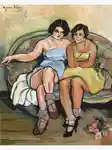
Image credit: Suzanne Valadon, Les Deux Sœurs (1928), Private collection. Photo © Matthew Hollow
The 1920s also saw the dawn of the ‘bob’ – a masculine hairstyle that at first caused outrage. Hairdressers refused to do it for their female patrons – either due to disapproval, or because they just had no idea how to cut women’s hair like this! At first, the women who wanted this haircut went to barbers instead.
However, this hairdo accelerated the beauty industry. While there were 5,000 hairdressing shops in the US in 1920, within four years, 21,000 shops had been established – as noted in The Washington Post’s 1925 story, headlined ‘Economic Effects of Bobbing’.
Suzanne Valadon’s Les Deux Sœurs (1928) shows two girls with bobbed hair.
Image credit: Suzanne Valadon, Les Deux Sœurs (1928), Private collection. Photo © Matthew Hollow
The 1920s also saw the dawn of the ‘bob’ – a masculine hairstyle that at first caused outrage. Hairdressers refused to do it for their female patrons – either due to disapproval, or because they just had no idea how to cut women’s hair like this! At first, the women who wanted this haircut went to barbers instead.
However, this hairdo accelerated the beauty industry. While there were 5,000 hairdressing shops in the US in 1920, within four years, 21,000 shops had been established – as noted in The Washington Post’s 1925 story, headlined ‘Economic Effects of Bobbing’.
Suzanne Valadon’s Les Deux Sœurs (1928) shows two girls with bobbed hair.
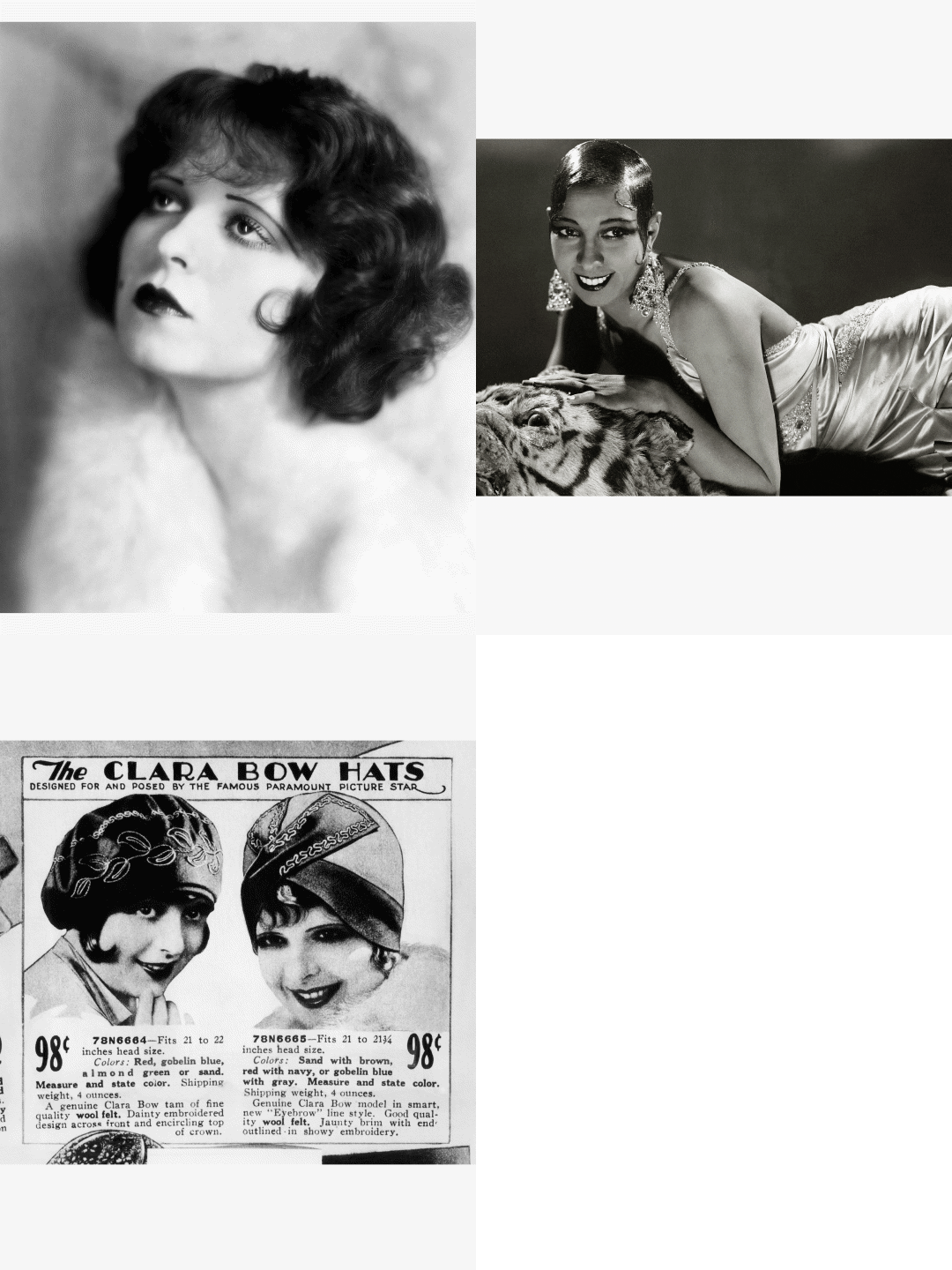
1: Clara Bow (1905-1965), Image credit: GRANGER - Historical Picture Archive / Alamy.2: Josephine Baker (1936). Image credit: PictureLux / The Hollywood Archive / Alamy. 3: Sears Roebuck catalogue (1928), Courtesy Everett Collection.
1: Clara Bow (1905-1965), Image credit: GRANGER - Historical Picture Archive / Alamy.2: Josephine Baker (1936). Image credit: PictureLux / The Hollywood Archive / Alamy. 3: Sears Roebuck catalogue (1928), Courtesy Everett Collection.
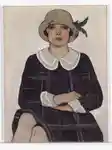
Image credit: Margaret Preston, Flapper (1925), National Gallery of Australia, Canberra. Purchased with the assistance of the Cooma-Monaro Snowy River Fund 1988 © Margaret Preston/Copyright Agency, 2026
The Australian artist Margaret Preston redefined the flapper in a painting from 1925 of the same name. While a flapper was a woman in the 1920s who wore modern-day clothing and didn’t abide by typical ladylike traditions – like smoking in public, being sexually free, and often behaving mischievously – here we are met with a formal stance and strong, serious gaze.
The model for this was Myra Warrell, Preston’s maid. Here we see her with youthfully blushed cheeks and her knees exposed. Stylistically, it shows a way of painting characteristic of the European avant-garde art movement, which she had seen on a trip abroad in her youth.
Expatriate Australians knew the value of travel to Europe and the importance of receiving modern ideas from the continent.
Here, Preston shows she is part of this lineage – she travelled and was culturally aware of what was happening.
Image credit: Margaret Preston, Flapper (1925), National Gallery of Australia, Canberra. Purchased with the assistance of the Cooma-Monaro Snowy River Fund 1988 © Margaret Preston/Copyright Agency, 2026
The Australian artist Margaret Preston redefined the flapper in a painting from 1925 of the same name. While a flapper was a woman in the 1920s who wore modern-day clothing and didn’t abide by typical ladylike traditions – like smoking in public, being sexually free, and often behaving mischievously – here we are met with a formal stance and strong, serious gaze.
The model for this was Myra Warrell, Preston’s maid. Here we see her with youthfully blushed cheeks and her knees exposed. Stylistically, it shows a way of painting characteristic of the European avant-garde art movement, which she had seen on a trip abroad in her youth.
Expatriate Australians knew the value of travel to Europe and the importance of receiving modern ideas from the continent.
Here, Preston shows she is part of this lineage – she travelled and was culturally aware of what was happening.